


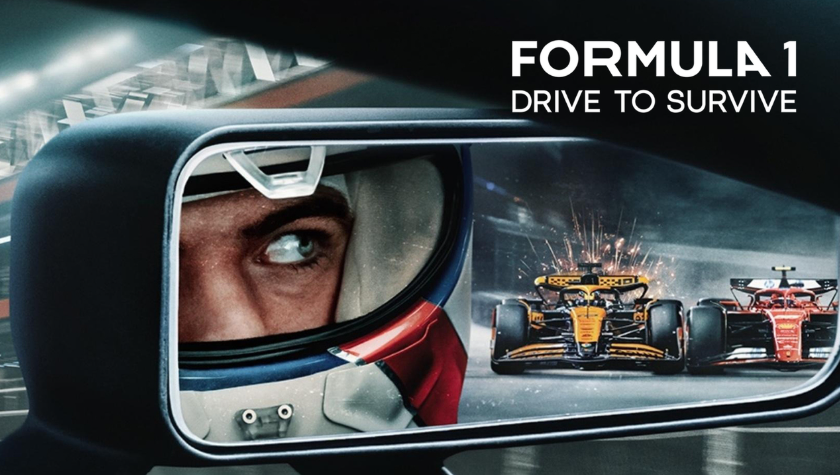
Documentaries about sport are now no longer padding between games. In 2026, they are a proven means of making competition all year-round storytelling.
Netflix’s Formula 1: Drive to Survive was its most defining moment, and The Last Dance showed that documentaries could be the catalyst for a big event discussion.
Urgency is still the domain of live sport, but documentaries have a different sort of urgency. They bring the athletes to life, encourage newcomers and foster competition even after the whistle blows.
When taking part in any event, engagement can seep into fantasy leagues, social media, merchandise, and for adults who bet, a Unibet promo code can be handy.
The ‘Drive to Survive’ blueprint: turning niche sports into global phenomena
Drive to Survive was not responsible for creating the sports documentary genre, but it was responsible for updating the formula.
Formula 1 has touted the 2019 season as the one that brought new fans into the sport and transformed the way fans relate with drivers and teams. Its impact is particularly felt in the US, which saw a significant increase in F1 viewers during the streaming period.
The ingredients are all the familiar ones: behind-the-scenes access, personality-driven drama and top-tier production.
Athletes turn into characters and not names on a timing screen. Competition is next to contract disputes, pressure, blunders and personal grievance, and editing and cinematography transform a familiar season into gripping television.
Golf was brought to Netflix and Box to Box, tennis with Break Point, cycling, rugby and athletics. However, not all spin-offs were as long-lived as Full Swing, which survived four seasons to 2026.
The commercial potential extends beyond the number of hours streamed. A successful series can help introduce viewers to sponsors, venues, tickets and merchandise, and help feed live interest.
Wrexham AFC’s financial reporting clearly related Welcome to Wrexham to better revenue from international income and merchandising, retail and licensing. Storytelling turns into audience acquisition.
Beyond the scoreboard: the power of human-centric storytelling
The outstanding sports documentaries are more effective if the audience does not understand the rules. Their true themes are competition, aspiration, downfall, redemption, self and togetherness. The structure of sport is natural and dramatic.
The Last Dance is still a standard. It was as much personality, memory and conflict as basketball in a game that revolved around Michael Jordan and the Chicago Bulls’ last championship season.
The original showings on ESPN in the United States were a record for the network for documentary viewing, averaging 5.6 million viewers, ESPN said. But what it was like to be on that team was the bigger question.
The third force that drives Welcome to Wrexham is the emotional connection. It’s more about a club, a town and a story of the underdog than a big star.
After three consecutive promotions, the FX series was in its fifth season by 2026. The score doesn’t tell the whole story; so do supporters, staff and local identity.
Traditional broadcasting is good at telling what has taken place. Documentaries tell why it is important to the people. That distinction opens sport up to readers who are more drawn to character than data.
From passive viewing to active fandom: how docs create engagement
The perception of closeness is altered through behind the scenes viewing. When you hear a driver talking about pressure, watching a golfer who has traveled from his/her tournament or seeing a football team go through the recruitment process, the next real time event is not so anonymous. The faces are familiar to fans, the tensions, the overlooked plot.
That insider feeling makes fans follow athletes online, join communities, purchase shirts, listen to podcasts and go back to watching the athletes in real time.
In 2026, Netflix announced that the Drive to Survive pathway will be extended, with the Canadian Grand Prix itself now being streamed live to US Netflix users in a collaboration with Apple. Documentation and live sport are coming together.
The journey from the couch to the bet slip
For some grown-up fans, sports wagering is a mechanism to take part. A narrator sets up a player/team, the audience becomes a part of the story, and a spectator wants to be part of the next game. Casual viewers have become fixture followers, and betting operators cater to them.
But documentary knowledge doesn’t create an advantage. There is more information in a betting market than in any series and edited storytelling is suited for drama.
The reasonable separation is between engagement and expertise: if you have a better feeling of the engagement, it can feel more significant, but it does not necessarily mean that it’s predictable.
The 2026 landscape: what’s next in the sports doc gold rush?
Next comes the part where it’s not even a form of sport anymore, but about access. Premier League teams have been featured in All or Nothing and rugby has had Six Nations: Full Contact, while IPL cricket has had Cricket Fever: Mumbai Indians.
The opportunity is to cover them deeper: with access to full seasons, quicker release times and league-wide content instead of another tell on a single team.
Athlete powered media enterprises are important too. Before joining the Fulwell Entertainment group, both Peyton Manning’s Omaha Productions and SpringHill (with LeBron James & Maverick Carter) have popularized the athlete-as-producer brand. Athletes are more than just wanting to be on camera—now they want to build influence as well.
Formats should also be given a facelift. In close to live documentary episodes, interactive statistics, multi-view feeds and ultimately even enhanced AR and VR experiences would help to reduce the gap between story and event.
That crossover is already happening, however, with Netflix switching from 8 seasons of Drive to Survive to live Formula 1 coverage in 2026.
Which is why sports documentaries are now the streaming obsession. They don’t just ‘repeat the results’. They make characters, gather up fans and prolong the commercial life of a season.
Live sports provide uncertainty, storytelling in documentary form provides an attachment. In 2026, the need for both is becoming more and more vital in the strongest sports media strategy.